Adapt a Comic for the Screen Without Treating Every Panel as a Shot
Adapt a Comic for the Screen Without Treating Every Panel as a Shot
Before deciding which panels to reproduce, decide what their arrangement does. Does a page let the reader compare two places, return to an earlier image, linger over a silence, or discover something only after a turn? The adaptation pitch needs to explain how the film will carry that relationship through duration, movement, sound, and disclosure.
Matching a composition can be part of that answer. It is not the whole answer. A drawing of a closed door does not specify how long the film waits outside it, what can be heard through it, or whether the audience already knows who is inside.
At the 2007 Cannes press conference for Persepolis, Marjane Satrapi described panel-by-panel filming as a risk rather than a ready-made adaptation method. Her account distinguishes the comic's own narrative form from the film language the adaptation needed to develop.[^1] That is a statement about her project's approach, not a prohibition on visual fidelity in yours.
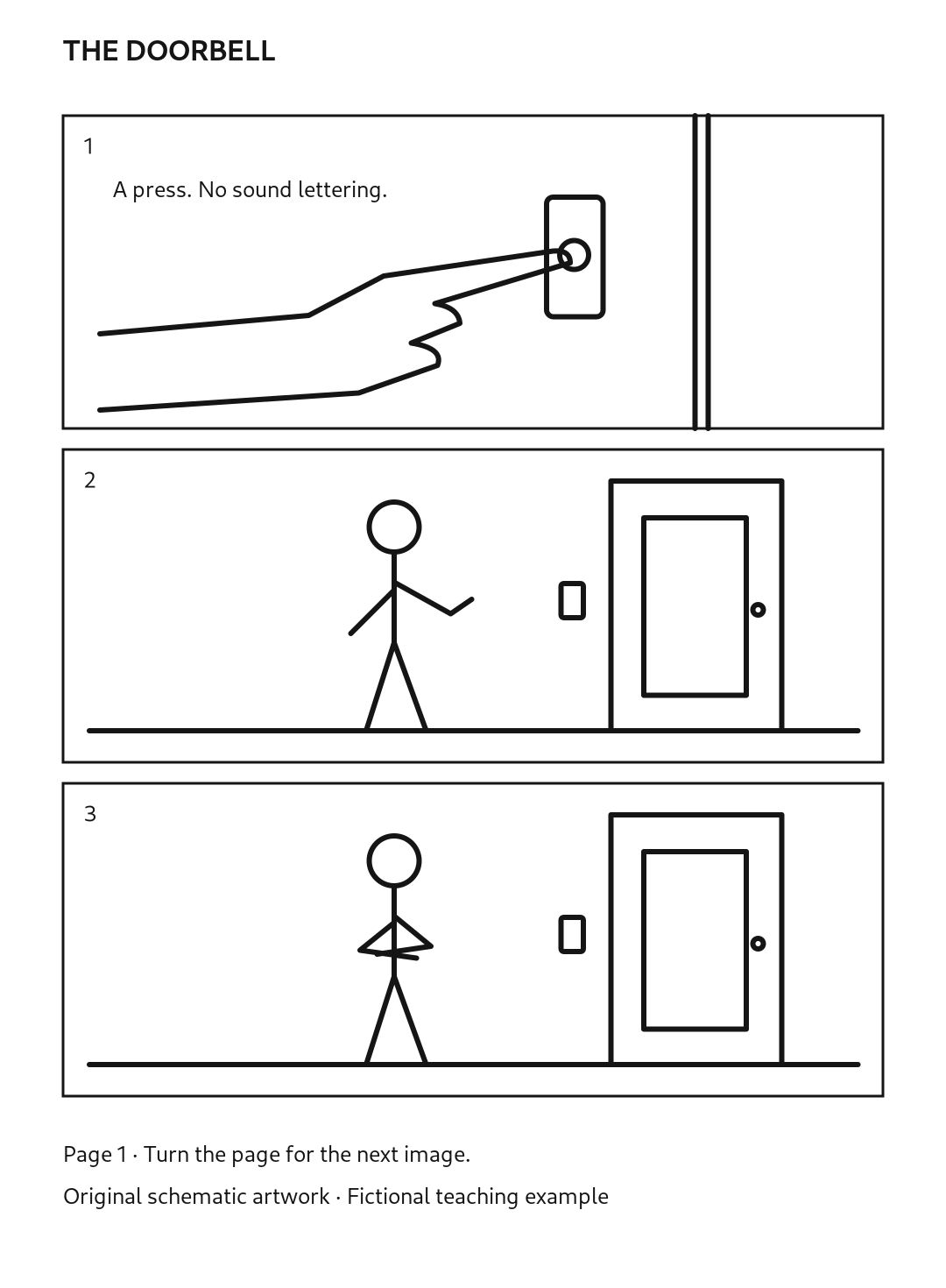
The following comparison uses an original fictional comic, The Doorbell. The drawings are deliberately schematic so that the adaptation decision remains visible. No published panels or film frames are reproduced.
Read what the page makes available
Page 1: a visitor presses a doorbell. A second panel shows the visitor waiting outside the closed door. A third stays outside. There is no sound lettering and no view of the interior.
Page 2, after the turn: another person stands inside holding a disconnected bell wire. The image shows the gap, but not who disconnected it or why.
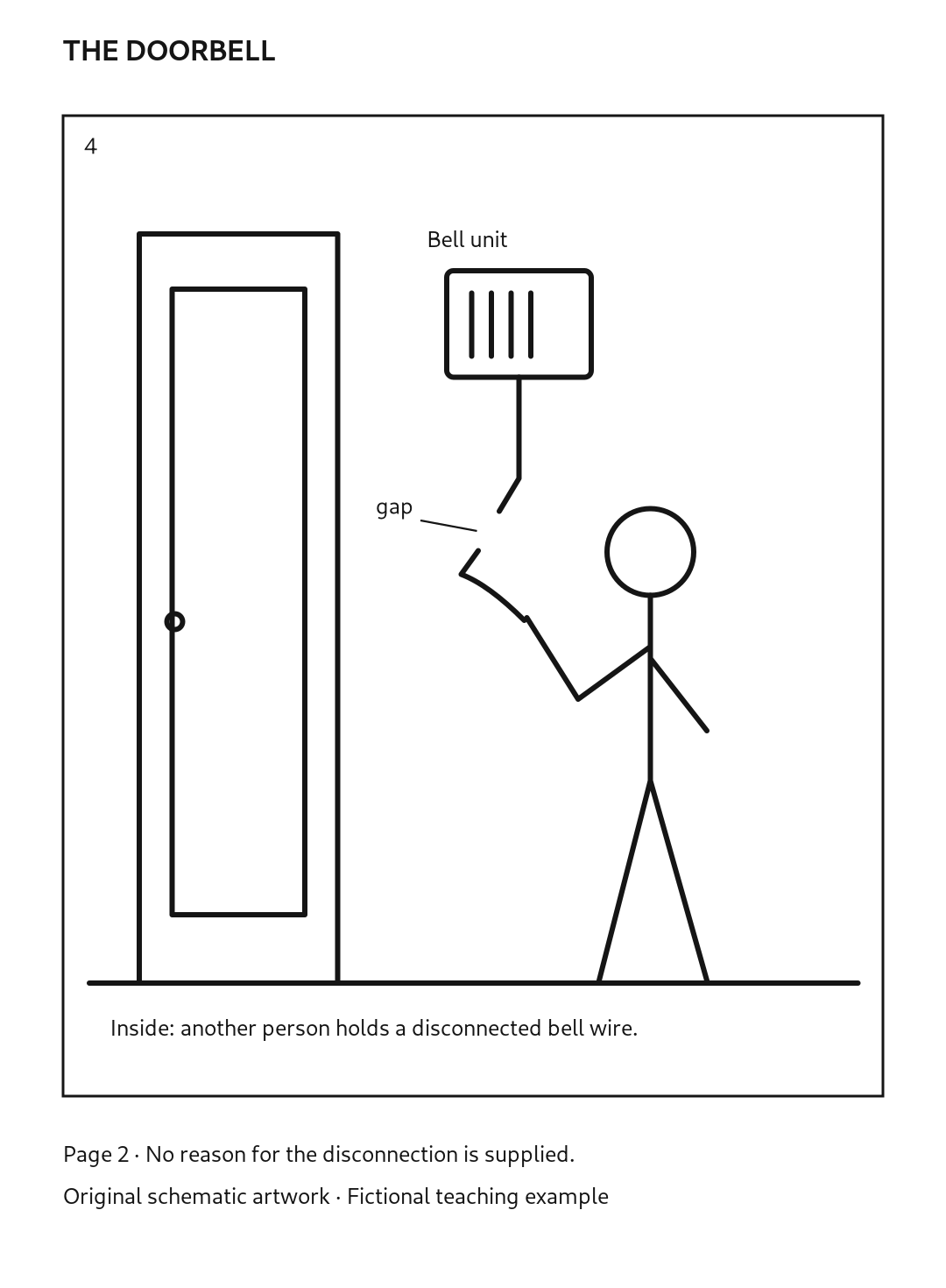
The two pages establish more than an inventory of pictures. The exterior wait comes before access to the interior. The later image offers information with which to reconsider the earlier silence. The separate pages allow that information to be withheld until the reader turns, although a reader can also skip ahead or turn back.
The three panels on page 1 do not assign three equal units of screen time. They separate a press from a wait and then extend attention to the wait. One reader may pass through them quickly; another may stop on the closed door. The arrangement proposes a reading sequence without operating a stopwatch.
There is also a limit to the revelation. Holding a disconnected wire does not establish that the person deliberately disabled the bell to avoid this visitor. Perhaps that is the story you wish to tell, but it is not supplied by these drawings. Adding that motive in the pitch would change the adaptation's content, not merely its wording.
Name the relationship worth preserving
A weak adaptation note would say:
We will retain the comic's spare visual style and reproduce its striking compositions.
That could describe the appearance of either of the film versions below. It does not explain what happens to the sequence.
A more useful account of this source is:
The comic keeps us outside with the waiting visitor before revealing the disconnected bell inside. The page turn changes what we know about the unanswered press, while leaving the occupant's motive unresolved.
Now there is a specific relationship to preserve or change. The key is not the visitor's exact distance from the door. It is the order in which information becomes available, together with the time spent waiting without it.
This distinction prevents a vague appeal to the source's “spirit.” You can say what the adaptation is trying to retain, identify the proposed screen operation, and name what will be different. A collaborator can then disagree with the actual decision rather than with an undefined claim of faithfulness.
For this example, compare two viable routes. Both retain the press, the wait, the disconnected wire, and the absence of an explained motive. They differ in what the viewer knows while the visitor is waiting.
Version A: wait first, reveal second
The first route preserves the source's basic disclosure order. The film stays outside through the press and the wait, then cuts inside.
The timings below are original working proposals, not measured scene lengths or tested recommendations. They give the comparison a concrete scale. Neither version has been filmed or made into an animatic.
| Proposed screen time | Picture and movement | Sound and available information |
|---|---|---|
| 0–3 seconds | Close view of the visitor pressing and releasing the button. | A small mechanical click and ordinary exterior ambience. No bell ring is supplied. |
| 3–15 seconds | Remain outside as the visitor lowers their hand, waits, and folds their arms. The door stays closed. | Exterior ambience continues. The reason for the unanswered press remains unavailable. |
| 15–20 seconds | Cut inside to the second person holding the loose wire beneath the bell unit. Hold long enough to make the gap readable. | Quiet interior room sound. The film supplies the disconnection, not an explanation of who caused it. |
The twelve-second wait is a deliberate allocation in this proposal. It is not a conversion of the two waiting panels into six seconds each. The intended effect depends on sustaining an unanswered action before showing information that bears on it.
You might stage the exterior as one continuous shot rather than reproducing both waiting panels. That would alter the comic's divisions while retaining the delayed access to the interior. Alternatively, you could preserve the two exterior compositions, provided the cuts have a purpose beyond checking off drawings.
In the pitch, make the governing decision clear before supplying shot detail. “We remain outside through the wait and reveal the wire afterward” tells the recipient more about this adaptation than four matched reference frames without a timing account.
The gain is a screen sequence organized around late information. The loss is the reader's control over how long to stay with the exterior page before turning it. The film proposes a duration; it cannot simply inherit the one each reader imagined.
Version B: reveal first, then stay with the visitor
Now put the wire first. Keep the event content, but change the audience's access to it.
| Proposed screen time | Picture and movement | Sound and available information |
|---|---|---|
| 0–5 seconds | Begin inside with the second person holding the disconnected wire. The closed door remains in view. | Interior room sound. The viewer receives information the visitor has not received. |
| 5–8 seconds | Cut outside for the button press and release. | The mechanical click, with no added bell ring. |
| 8–20 seconds | Stay outside as the visitor waits and folds their arms. Do not return inside. | Exterior ambience continues. The viewer carries the earlier interior image into the wait. |
The total proposed duration is still twenty seconds. Even the length of each action block is unchanged. What changes is the information available during those twelve seconds outside.
In Version A, the wait precedes the explanation offered by the wire. In Version B, the audience has already been shown the disconnection while the visitor continues without that knowledge. The adaptation now asks us to watch the gap between what we know and what the visitor appears to know.
That is a different dramatic invitation. It may be more useful when the film wants the audience to anticipate the failure of an action rather than discover its explanation afterward. Calling it “more suspenseful” as a settled result would go too far without seeing the realized sequence and its surrounding context. The pitch can accurately describe the intended use of unequal knowledge.
This route also spends the interior reveal early. If the comic's late image is essential to the larger sequence's pattern of discoveries, Version B gives up that particular construction. The new route needs a reason for doing so. “It feels more cinematic” is not much of one.
Sound can change the adaptation before the image changes
The original page has no sound lettering. That is not a complete sound design. It does not tell us the volume of the street, whether the visitor hears anything from inside, or how the film distinguishes exterior and interior space.
Both proposed versions use a small click at the button rather than a bell ring. This keeps the press perceptible without supplying the sound of a functioning bell. It also avoids claiming that exterior silence alone proves what is happening inside. The later or earlier image supplies the visual disconnection.
Suppose a treatment adds a loud buzz at the press because it wants a stronger sound cue. That is no longer a neutral embellishment. If the buzz is meant to come from this bell, the proposal needs to account for how it relates to the disconnected wire. Perhaps the disconnection occurs later. Perhaps the sound has another source. Either explanation changes information or events the example has not yet supplied.
The same applies to music that labels the occupant as threatening. It would introduce an interpretive direction absent from the schematic source. That may be a valid choice, but the pitch should identify it as a choice rather than claim the original image already establishes the person's intent.
Make the audio proposal answer a narrative question: what does it let the viewer know, suspect, or remain uncertain about at this moment? A mood word is not enough when the sound changes the causal reading of the scene.
Keep fidelity where it is doing useful work
Nothing in the comparison requires abandoning the drawings. The closed door could remain a repeated composition. The visitor's folded arms could connect the screen wait to the final exterior panel. The large interior reveal could become a held image whose stillness matters after the small movements outside.
The question is what those continuities contribute. A matching composition may preserve a visual relationship or make a recurring motif recognizable. It does not settle when the shot starts, when it ends, what precedes it, or which sounds accompany it.
One practical pitch layout is a small original source sequence beside a plain-language account of the screen choice. Keep the source function, proposed treatment, and accepted change distinguishable. Do not bury the decision under a gallery so dense that the reader has to reverse-engineer your adaptation from the images.
For work using a published comic, use only source images available for the intended use. A useful textual account can explain the relationship without reproducing a page. The example here avoids that dependency by creating its own source material; it makes no claim about adaptation rights or clearance for another work.
Put one adaptation decision into the pitch
For Version A, the finished paragraph might read:
The comic lets us wait outside before the page turn reveals a disconnected bell inside. We retain that late disclosure. On screen, the press is brief and the exterior wait is sustained; only afterward do we cut to the loose wire. A small button click and exterior ambience keep the unanswered action present without adding a working bell ring. We preserve the source's change in knowledge rather than turn each panel into an equal-length shot. The trade-off is a fixed stretch of waiting in place of the reader's control over the page turn; the occupant's motive remains unresolved.
Version B would require a different paragraph, not a different set of adjectives:
We reveal the disconnected bell before the visitor presses it, then remain outside through the wait. The viewer carries information the visitor lacks. This gives up the comic's late reveal and uses the same images to sustain unequal knowledge instead. The wire establishes a disconnection, not who caused it or why.
Choose according to the work this moment must do in the film. The two routes can look very similar in a collection of stills. Their adaptation decisions become clear only when you explain what arrives first, what remains unavailable, and how long the film asks us to stay there.
Sources
[^1]: Festival de Cannes, Press Conference: “Persepolis”, May 23, 2007, “On the challenge of adaptation,” Marjane Satrapi's remarks. Inspected September 19, 2026. This first-person account supports the attributed distinction between comic storytelling and film construction. No specific Persepolis page/scene pair is analyzed here; all diagrams, timing alternatives, and effects proposed for The Doorbell are original editorial work.
Frequently asked questions
What should an adaptation pitch preserve from a comic page besides its drawings?
It should explain what the arrangement does: what the reader compares, returns to, lingers over, or discovers only after a turn. Matching a composition can preserve a visual relationship, but it does not settle duration, movement, sound, or disclosure. For The Doorbell, the key relationship is waiting outside before the page turn reveals the disconnected bell inside.
How do Version A and Version B differ if they use the same event content and total duration?
Version A waits outside through the press and the wait, then cuts inside to the loose wire. Version B reveals the disconnected wire first, then stays outside while the visitor waits. The events and twenty-second total are the same; what changes is what the audience knows during the wait. Version A preserves late disclosure; Version B uses unequal knowledge and gives up the comic's late reveal.
Why use a small click instead of a bell ring when the source has no sound lettering?
The absence of sound lettering is not a complete sound design. A click keeps the press perceptible without supplying the sound of a working bell and without claiming exterior silence proves what is happening inside. A loud buzz would change the causal account: the proposal would need to explain how it relates to the disconnected wire or name another source.
What does the disconnected bell wire establish, and what would be an unsupported addition?
It establishes that a second person inside is holding a disconnected wire. It does not establish who disconnected it, why, or that the person deliberately disabled the bell to avoid the visitor. Adding that motive would change the adaptation's content, not merely its wording.
What trade-off should the pitch name when choosing Version A?
Version A gains a screen sequence organized around late information, but it loses the reader's control over how long to stay with the exterior page before turning. The film proposes a fixed duration—here a twelve-second wait in the working proposal—rather than inheriting each reader's imagined pace. The timings are proposals, not measured or tested scene lengths.